Affiliate disclosure: This article contains affiliate links. If you sign up through one of these links, we receive a commission at no extra cost to you.
You can place a winning bet and still have taken a poor price.
You can also place a losing bet and have made a very good betting decision.
That can sound a little strange at first, but it is one of the reasons many serious bettors pay attention to Closing Line Value, usually shortened to CLV.
Closing Line Value compares the odds you took with the price available when the market closed. If you regularly manage to take better odds than the closing market, it can be a useful sign that you are finding value before the rest of the market catches up.
Over time, it can give you another way of judging the quality of the prices you are taking.
What Is Closing Line Value (CLV)?
Closing Line Value measures how the odds you took compare with the final market price before an event starts.
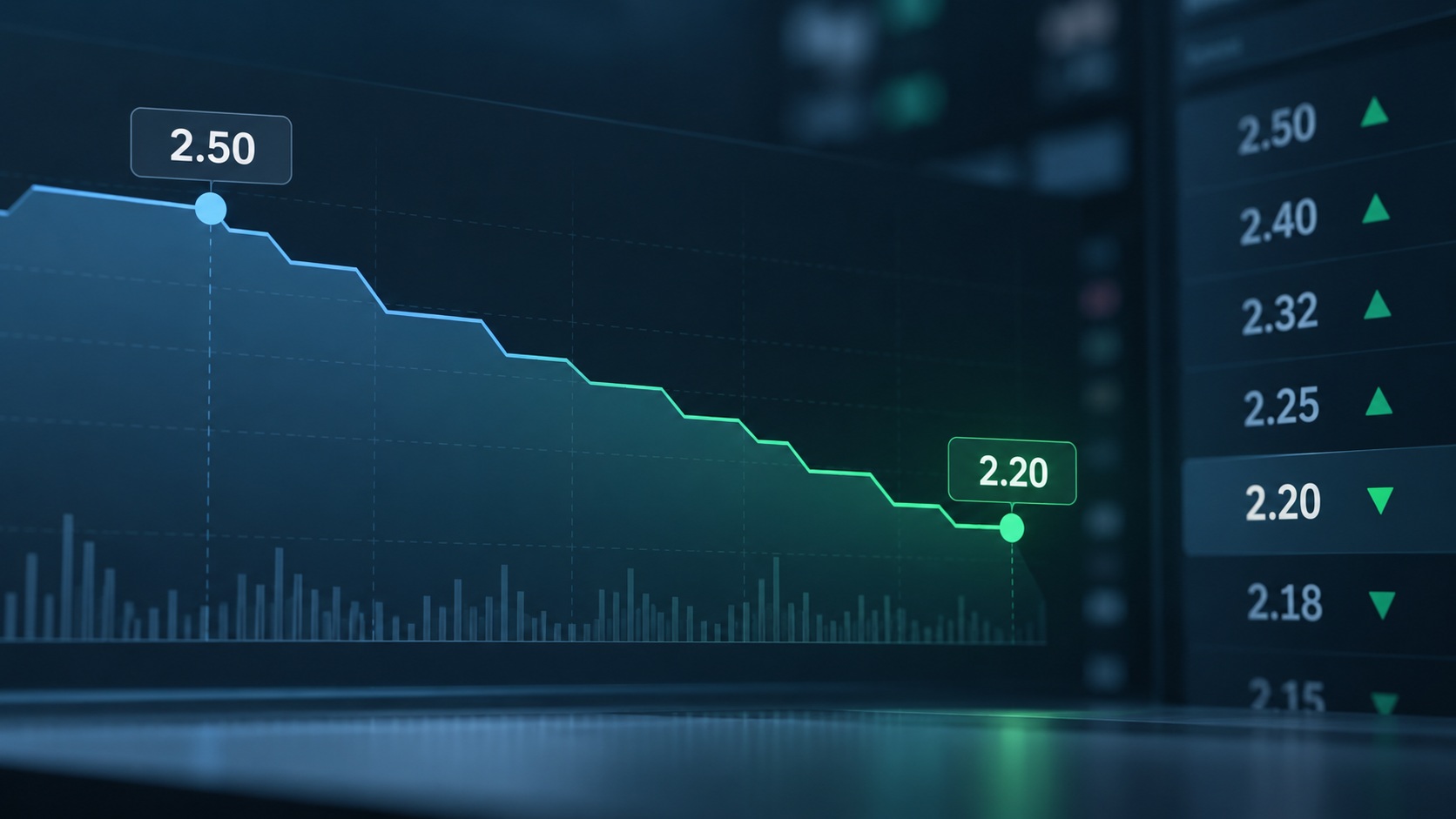
Suppose you back a football team at 2.50.
By kick-off, that same team is trading at 2.20.
You have taken the better price, so you have achieved positive CLV.
If the opposite happens and you take 2.00 before the market later moves out to 2.30, you have taken a worse price than the closing market. That would be negative CLV.
The idea is quite straightforward. You are looking at whether the market eventually moved towards the price you took or away from it.
The closing price is useful because, by that stage, the market has usually had much more time to absorb team news, injuries, weather, betting activity and other information that can affect the odds.
How Is Closing Line Value Calculated?
At its simplest, you can compare the odds you took with the closing odds.
If you backed a selection at 3.00 and it closed at 2.50, you beat the closing line.
If you backed it at 2.50 and it closed at 3.00, you did not.
You can also express CLV as a percentage, although there are slightly different ways of calculating it.
One simple approach is:
(Odds taken ÷ closing odds – 1) × 100
So if you backed a selection at 3.00 and it later closed at 2.50:
(3.00 ÷ 2.50 – 1) × 100 = 20%
That gives you CLV of +20%.
If you took 2.50 and the market closed at 3.00:
(2.50 ÷ 3.00 – 1) × 100 = -16.67%
In practice, you do not necessarily need to calculate CLV to the decimal point every time. Simply recording the price you took alongside the closing price can already tell you a lot.
Why Does Closing Line Value Matter?
Betting results can be noisy, particularly over a small number of bets.
You can make several poor bets and still win because the results happened to go your way. You can also take excellent prices and lose simply because the selections did not win.
That makes short-term profit and loss a fairly unreliable way of judging whether your betting decisions are actually good.
CLV gives you another piece of information.
If you consistently take prices that later shorten, it suggests the market is moving towards your original position. That does not prove every bet was good, but over time it can be a useful indication that you are finding prices before they disappear.
This is closely related to value betting. The difference is that value betting asks whether the odds are bigger than the true probability warrants, while CLV looks at whether the price you took was better than the price the market eventually settled on.
Can You Beat the Closing Line and Still Lose Money?
Yes, absolutely.
Imagine you regularly back selections at 3.00 that later close at 2.60.
You may be getting very good prices, but bets at those odds will still lose plenty of the time. A poor run of results could leave you down money even if you have consistently beaten the closing market.
That is where variance comes in.
Over a small sample, results can easily move against you. CLV is more useful when looked at across a much larger number of bets rather than judging it from a handful of selections.
What Does Negative CLV Tell You?
Negative CLV means the market moved against the price you took.
For example, if you back a team at 2.00 and it closes at 2.30, the later market is offering a better price than the one you accepted.
That does not automatically mean your original bet was wrong. One drifting price tells you very little; the more useful question is whether it happens regularly.
If your bets consistently drift after you place them, it may be worth looking more closely at how you are finding selections and whether you are accepting prices too early or at poor value.
One or two examples tell you very little. A repeated pattern is much more meaningful.
How Much Closing Line Value Is Good?
There is no single percentage of CLV that should be considered “good”.
What is realistic will depend on the market, the sport, the liquidity and how early you are betting.
Someone betting into smaller markets several hours before an event may see much larger price movements than someone betting just before kick-off in a highly liquid market.
The more useful goal is consistency.
Consistently taking slightly better prices than the closing market can be more meaningful than occasionally recording one huge CLV figure alongside a lot of poor ones.
It is also worth remembering that very large CLV can sometimes be caused by late information rather than your original analysis being particularly strong.
How to Track Your Closing Line Value
You do not need anything complicated to start tracking CLV.
For each bet, record:
- the selection
- the odds you took
- the closing odds
- whether the price shortened or drifted
- the percentage CLV, if you want to calculate it
A simple spreadsheet is enough.
After a reasonable number of bets, you can start looking at the overall pattern rather than individual examples.
You might find that you consistently beat the closing line in certain markets but not others. You may also notice that bets placed at a particular time perform better in CLV terms than bets taken much earlier or later.
That kind of information can be much more useful than obsessing over whether the last five bets won.
Closing Line Value and Betting Tipsters
CLV can also be useful when assessing betting tipsters.
A tipster might have an impressive run of results, but the more interesting question is whether the prices they advise regularly shorten afterwards.
If a service consistently recommends selections at 5.00 that later close at 4.00, that suggests the tipster may be identifying value before the rest of the market moves.
Again, that does not guarantee long-term profit, but it gives you useful information about the quality of the prices behind those headline returns.
It can also help when comparing two tipsters with similar profits. One may have achieved those returns while regularly beating the closing market, while the other may have enjoyed a favourable run of results.
This is one of the things worth looking at when choosing a betting tipster, particularly if the service publishes enough information to compare advised prices with later market prices.
For horse racing services, there is also a related question around advised odds and Betfair Starting Price.
I have covered that separately in my guide to advised odds vs Betfair SP, because BSP is useful as a closing benchmark but raises its own issues around price availability and whether followers could realistically obtain the advised odds.
Is Closing Line Value Always Reliable?
CLV is useful, but it is not perfect.
The closing market is not automatically correct. Markets can still misprice events, particularly in lower-liquidity competitions where there is less money and information available.
Late team news or other information can also move a price sharply after you place a bet. In those cases, negative CLV does not necessarily mean the original decision was poor based on what was known at the time.
There is also the question of which closing price you use. Different bookmakers and exchanges may finish at slightly different odds, so it helps to use a consistent source when tracking your own results.
Most importantly, CLV needs a decent sample size.
Beating the closing line on three bets tells you almost nothing. Doing it consistently across hundreds of bets is far more interesting.
Final Thoughts
Closing Line Value gives you another way to judge your betting decisions without relying entirely on short-term profit and loss.
If you regularly take odds that later shorten, it can be a useful sign that you are finding good prices before the market adjusts.
Positive CLV still does not guarantee a profit, but it gives you something useful to measure alongside your results.
Over time though, tracking whether you beat the closing market can tell you something that the result of one bet never can: whether the prices you are taking are consistently better than the ones available later.