
Affiliate disclosure: This article contains affiliate links. If you sign up through one of these links, we receive a commission at no extra cost to you.
If you bet on sports, there’s a good chance you’ve fallen for the Gambler’s Fallacy at some point without even realising it.
It’s the idea that because something has happened several times in a row, the opposite outcome must now be “due”.
The classic example comes from roulette. If black has landed five times in succession, it can feel as though red must be more likely on the next spin. In reality, assuming the wheel is fair, those previous spins don’t make red any more likely.
Sports betting is slightly more complicated because previous results can sometimes tell us something useful about a team, player or horse. The mistake comes when we assume an outcome is more or less likely simply because of the sequence that came before it.
In this article, I’ll explain how the Gambler’s Fallacy works, where it can catch sports bettors out and how to avoid letting the idea that something is “due” influence your betting decisions.
Origins of the Gambler’s Fallacy
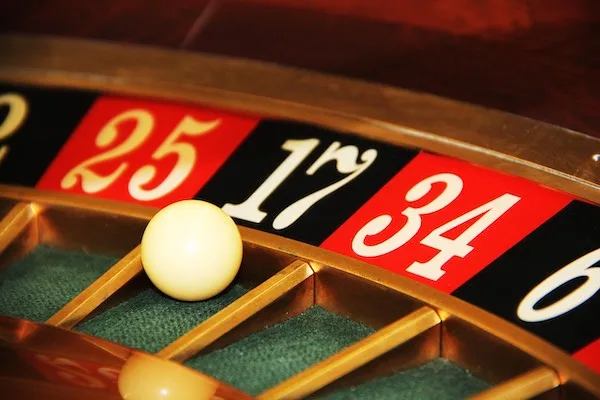
One of the most famous examples of the Gambler’s Fallacy took place at the Casino de Monte-Carlo in 1913. On one roulette table, the ball reportedly landed on black 26 times in a row.
As the run continued, gamblers increasingly backed red, believing that it had to appear soon. Instead, black kept landing and the losses mounted.
The mistake was assuming that the previous spins had changed the probability of the next one.
They hadn’t.
On a fair roulette wheel, one spin doesn’t remember what happened on the previous spin. A long run of black may be unusual, but once those spins have already happened, they don’t make red more likely on the next attempt.
The incident became so closely associated with this way of thinking that the Gambler’s Fallacy is also sometimes known as the Monte Carlo Fallacy.
The Maths – Simplified
A coin toss is the easiest way to understand the Gambler’s Fallacy.
With a fair coin, each flip has a 50% chance of heads and a 50% chance of tails.
Suppose you flip five heads in a row:
H – H – H – H – H
It might feel as though tails must now be more likely, but it isn’t.
The next flip is still 50/50 because each toss is independent of the ones that came before it.
Where people get confused is that over a very large number of flips, we would expect the overall results to move towards roughly 50% heads and 50% tails.
That doesn’t mean short runs have to balance themselves out.
Five heads in a row doesn’t create some sort of “debt” that tails now needs to repay.
The Gambler’s Fallacy in Sports Betting

Sports betting is more complicated than flipping a coin or spinning a roulette wheel.
Matches and races aren’t completely independent events. Recent results can sometimes provide useful information about form, fitness, tactics or performance.
The Gambler’s Fallacy happens when you go a step further and assume an outcome is more likely simply because another outcome has happened several times in a row.
For example:
“They’ve won six in a row, so they’re due a loss.”
or:
“This horse has lost its last five races, so surely it has to win soon.”
Neither statement gives you a betting edge on its own.
1) Football
Recent form is one of the first things many bettors look at when analysing a football match, but it needs to be put into context.
A team may have won six matches in a row, but those results alone don’t tell you what their chances are of winning the next one. They may have faced weaker opposition, benefited from playing several games at home or simply had a particularly good run of finishing.
On the other hand, the winning streak could reflect a genuine improvement in performance.
Rather than assuming the run must either continue or come to an end, look at why those results occurred and whether the same factors are relevant to the next match.
2) Horse Racing
In horse racing, recent results can be useful, but they can also be misleading if you look at them without any context.
A horse that has lost its last five races isn’t automatically “due” a win, just as one that has won several times in a row isn’t necessarily overdue a defeat.
Instead, look at why those results happened. Was the horse running over the wrong distance, on unsuitable ground or in stronger company? Has its handicap mark changed? Are today’s conditions more suitable?
The previous results matter because they can tell you something about the horse, not because a losing or winning streak has to balance itself out.
3) Tennis
Tennis is another sport where a run of results can easily influence how bettors think.
A player may arrive at a match on a long winning streak, but that doesn’t mean the run has to end soon. At the same time, the streak itself isn’t enough reason to assume they will keep winning either.
Things like the opponent, playing surface, recent workload, fitness and head-to-head matchup can all be much more relevant than the number of consecutive wins or losses.
The useful question isn’t whether a player is “due” a result, but whether the current matchup gives them a genuine reason to be more or less likely to win.
When Is It Not the Gambler’s Fallacy?
It’s important not to take this idea too far.
Using past results in sports betting isn’t automatically an example of the Gambler’s Fallacy.
Suppose a football team has lost five games in a row because several first-team players are injured. Those previous results may tell you something useful about their current strength.
Likewise, if a horse keeps struggling over a particular distance or a tennis player has repeatedly performed poorly on clay, that historical information may genuinely affect how you assess the next event.
The key difference is whether there is a logical reason for the past information to affect the future probability.
Compare these two statements:
“They’ve lost five in a row, so they must be due a win.”
or:
“They’ve lost five in a row, but three key players are returning from injury and today’s opposition is much weaker.”
The first is Gambler’s Fallacy thinking.
The second is using new information to reassess the probability of an outcome.
How to Avoid Falling into the Gambler’s Fallacy Trap
Final Thoughts
The Gambler’s Fallacy is essentially the belief that a run of previous outcomes makes the opposite result more likely simply because it is “due”.
That is easy to see with independent events such as roulette spins or coin tosses, but sports betting requires a little more care.
Past results can sometimes provide useful information. The mistake is assuming that a winning or losing streak has to end purely because it has gone on for a certain length of time.
Whenever you catch yourself thinking that a team is “due a win”, a horse “can’t lose again” or a player’s winning streak “has to end soon”, ask yourself one question:
What has actually changed to make that outcome more likely?
If the only answer is the previous sequence of results, there’s a good chance the Gambler’s Fallacy has crept into your thinking.